Recruitment is where most HR teams first encounter AI and where most of them get it wrong.
Recruitment is one of the highest-impact areas where AI can genuinely transform what HR delivers, but it requires intentionality.

Abdul Razak Naidu
trainer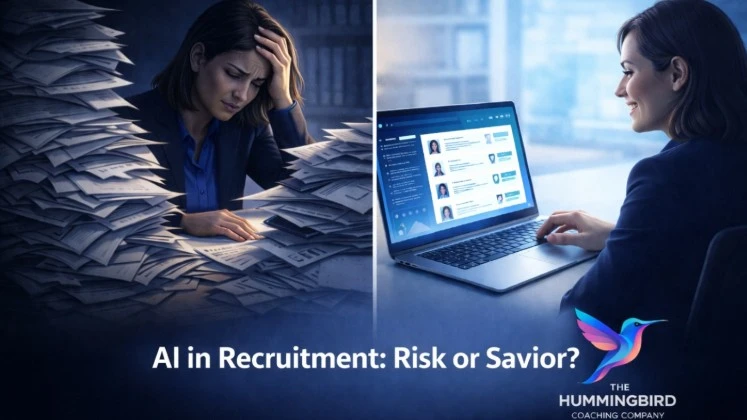
Recruitment is where most HR teams first encounter AI and where most of them get it wrong.
Not because they're careless. But because AI in recruitment looks so easy from the outside, people rush straight to implementation without thinking it through.
Today, I want to give you an honest, practical picture of where AI genuinely helps in recruitment and where you need to be careful.
Where AI Actually Helps in Recruitment
The recruitment process has many steps. Most of them are heavily manual and time-consuming. AI can help at almost every stage, but the impact varies. The highest-value areas are: writing job descriptions, screening CVs at volume, scheduling interviews, and communicating with candidates throughout the process.
Use Case 1: Writing Better Job Descriptions Faster
A talent acquisition lead at a fast-growing fintech company was the sole recruiter managing 15 open roles simultaneously. Writing job descriptions alone was eating up 3 to 4 hours of her week.
She started using AI to draft job descriptions. She'd give it the job title, the key responsibilities as bullet notes, the seniority level, and the tone she wanted. Within 30 seconds, she had a solid first draft. Did she use them as-is? No. She edited every single one. But she went from staring at a blank page for 45 minutes to editing a good draft in 10 minutes, a 75% reduction in time.
And because she had better, clearer job descriptions, she started attracting candidates who were a much better fit. Fewer irrelevant applications. Better quality shortlists.
Use Case 2: CV Screening at Scale — Done Right
A manufacturing company was hiring 30 production operatives in a short window. Their HR team of two was being buried under hundreds of applications.
They used an AI screening tool to filter applications against a clear set of criteria they defined: relevant experience, location, shift availability, and certifications. Critically, and this is the part most teams skip, they reviewed the tool's criteria before running it. They checked that nothing in their screening logic could inadvertently filter out protected groups. They kept a human reviewing all borderline cases.
The result: their shortlisting time dropped from three days to half a day. They hired all 30 roles on time, something that hadn't happened in 2 previous hiring rounds.
Where to Be Careful
AI in recruitment isn't without risk. The most significant one is bias. AI learns from data. If your historical hiring data reflects past biased decisions, and most do, even subtly, your AI tool can replicate and amplify those biases at scale.
The rule here is simple: never hand the decision to the AI. AI should narrow the field and surface information. Humans make the call. Always. And always audit your screening criteria before you run them.
AI makes recruitment faster. Thoughtful humans make it fair. You need both.
Recruitment is one of the highest-impact areas where AI can genuinely transform what HR delivers, but it requires intentionality. Used well, it frees you to do the parts of recruitment that actually need a human.
Have you used AI in your recruitment process? What worked, and what didn't? I would love to hear in the comments.
Next week: AI in Onboarding – the most underused opportunity in HR.
Series: AI in HR — Making It Work For You | Post 3 of 8